As global EV platforms accelerate toward 800V architectures, thermal efficiency and mass optimization have become decisive factors. The rise of the 800V liquid - cooled cable assembly is not simply a component upgrade; it represents a system-level rethink of how power, heat, and structure interact under extreme charging loads. In parallel, OEMs are re-evaluating EV high - voltage wiring strategies to unlock faster charging without compromising safety or durability.

Industry Context: Why 800V + Liquid Cooling Is Now Essential
Ultra-fast charging pushes current density and thermal stress far beyond what conventional solutions can tolerate. Advanced wire harness for cars must now carry higher voltage while remaining lighter, more compact, and easier to integrate. This is where the 800V liquid - cooled cable assembly demonstrates its value, reducing resistive losses and stabilizing temperature during peak load.
From an architectural standpoint, next-generation EV high - voltage wiring shifts from passive tolerance to active thermal management. Liquid cooling channels integrated into the conductor structure allow sustained high power delivery, directly enabling 15-minute fast charging windows. At the same time, optimized car harness wire layouts reduce overall vehicle mass, contributing to measurable range improvements.
Yihetai’s Engineering Approach
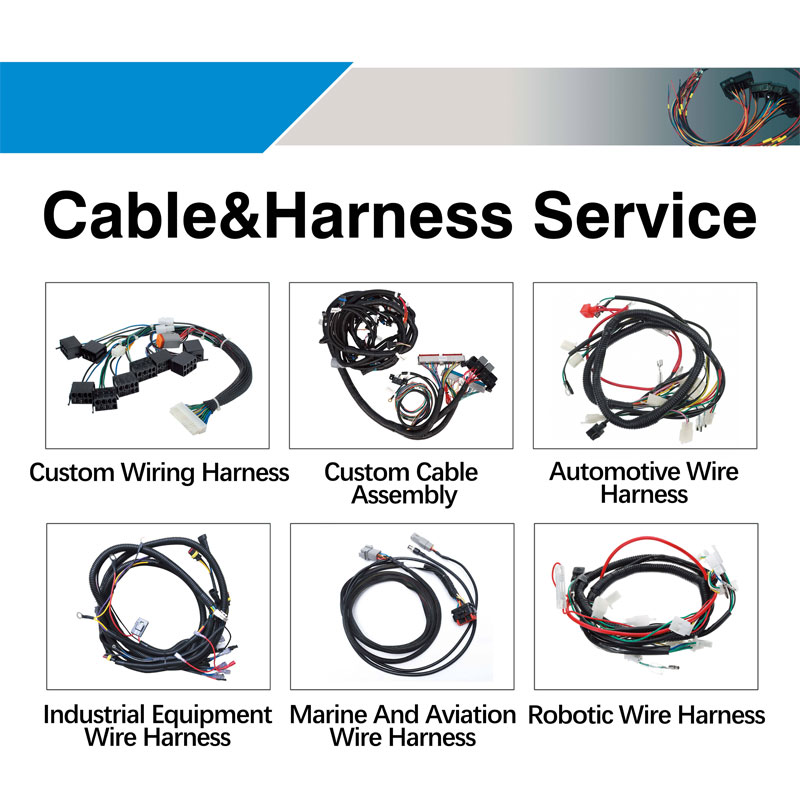
With more than 20 years of industry expertise, Yihetai designs electric wire harnesses for automobiles that align with global OEM requirements under ISO9001 and IATF 16949 systems. Their R&D teams focus on conductor material optimization, insulation thinning without dielectric compromise, and modular routing concepts. These innovations make the 800V liquid - cooled cable assembly lighter by design, not by trade-off.
Equally important is manufacturability. Precision process control ensures every wire harness for cars meets tight resistance and cooling performance tolerances. By synchronizing design, prototyping, and scaled production, Yihetai shortens development cycles for customized EV high - voltage wiring platforms.
Key Performance Parameters (Industry Reference)
| Parameter | Conventional HV Cable | 800V Liquid-Cooled Solution |
| Continuous Current Capacity | Medium | High |
| Thermal Stability | Passive | Active liquid cooling |
| Weight per Meter | Higher | Reduced by lightweight design |
| Charging Time (10–80%) | 30–40 min | ~15 min |
| Range Impact | Neutral | ~15% improvement |
These metrics highlight why OEMs increasingly specify electric wire harnesses for automobiles with integrated cooling and lightweight structures.
Lightweight Design: More Than Material Reduction
True lightweighting optimizes topology, not just raw material. By redesigning car harness wire routing and minimizing redundant shielding, Yihetai enables compact packaging around battery packs and inverters. This systems thinking allows the 800V liquid - cooled cable assembly to support higher power density while freeing up space for energy storage or structural reinforcement.
Such integration elevates wire harness for cars from a passive connector to a performance-enabling subsystem within the EV platform.
FAQ
Q1: Does liquid cooling add complexity to EV high-voltage systems?
When engineered correctly, EV high - voltage wiring with integrated cooling simplifies thermal management at the vehicle level by reducing reliance on oversized conductors.
Q2: How does lightweight wiring translate to longer range?
Reduced mass in electric wire harnesses for automobiles lowers overall vehicle weight, directly improving energy efficiency and extending driving range.
Q3: Are these solutions scalable for mass production?
Yes. Yihetai’s standardized yet customizable processes allow wire harness for cars to scale from prototype to volume production with consistent quality.
Call to Action
As 800V platforms become mainstream, OEMs and Tier-1 suppliers must reassess legacy car harness wire designs. Partnering with an experienced manufacturer capable of delivering a robust 800V liquid - cooled cable assembly is no longer optional—it is a strategic necessity. Yihetai invites global partners to collaborate early in platform development to maximize charging performance, safety, and efficiency.
Conclusion
The convergence of 800V architectures, liquid cooling, and lightweight engineering marks a turning point for EV power distribution. By advancing EV high - voltage wiring and redefining electric wire harnesses for automobiles, Yihetai demonstrates how thoughtful design can simultaneously enable 15-minute fast charging and a 15% range increase. In the next phase of electrification, innovation within the wire harness for cars will be as critical as the battery itself.