Choosing an automotive wiring supplier in 2026 is no longer simply about comparing unit prices.
For vehicle OEMs, aftermarket brands, Tier 2 suppliers, modification companies, and engineering procurement teams, the real question is whether a supplier can consistently turn a drawing or electrical requirement into a reliable production-ready harness—and continue delivering the same quality when the project moves from prototype to mass production.
The increasing complexity of vehicle electrical systems makes supplier selection even more critical. Recent market research estimates that the global automotive wiring harness market could reach USD 74.7 billion in 2026, with continued growth driven by vehicle electrification, ADAS, connectivity, and increasing electronic content.
So, when evaluating an OEM & ODM wire harness manufacturer in 2026, what should purchasing managers and project engineers actually check?
The following guide covers six key areas: compliance, engineering capability, prototype development, production flexibility, testing, and delivery control.
1. What Is an Automotive Wire Harness?
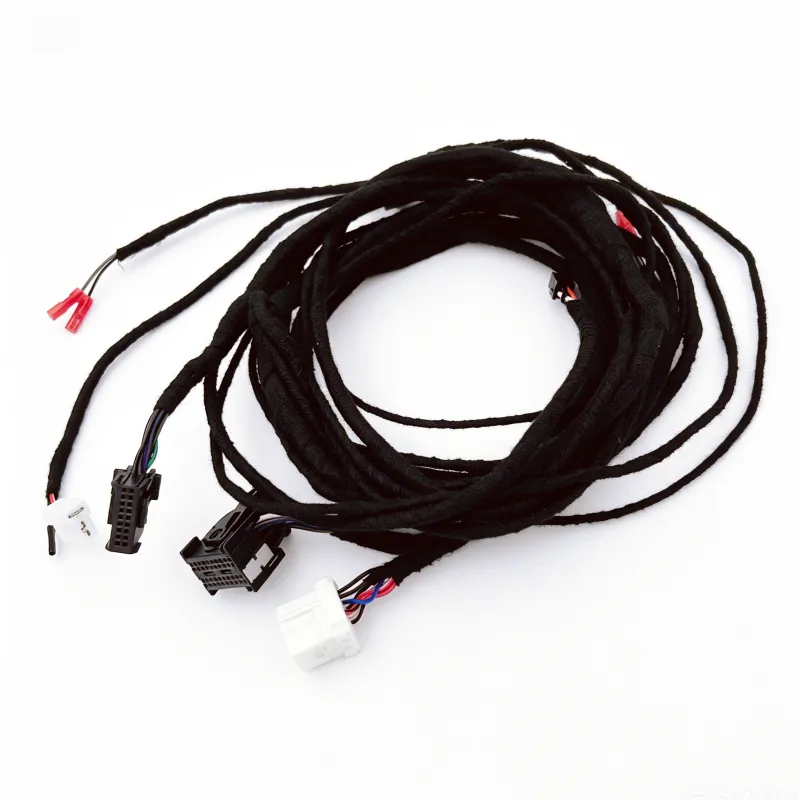
An automotive wire harness is an integrated electrical assembly that combines wires, cables, terminals, connectors, protective sleeving, clips, conduits, seals, and other components into a defined circuit system.
Unlike a simple electrical cable, a custom vehicle wiring harness is designed around the vehicle's electrical architecture and physical installation requirements.
Depending on the application, an automotive harness may connect:
Battery and power distribution systems
Engine or motor control units
Sensors and actuators
Lighting systems
Dashboard and instrument clusters
HVAC systems
Doors, seats and body electronics
ADAS components
Infotainment and communication systems
EV battery and charging systems
High-voltage power electronics
This is why an automotive car wire harness supplier must provide more than cutting and crimping services.
The supplier needs to understand electrical specifications, mechanical routing, connector selection, terminal crimping, insulation protection, assembly requirements, testing and production consistency.
2. Why Is Supplier Selection More Difficult in 2026?
Modern vehicles are becoming increasingly electronics-intensive.
Market research indicates that high-voltage harnesses, ADAS-related wiring, automotive Ethernet, EV power distribution and zonal electrical architectures are becoming important growth areas. One 2026 market analysis estimates the automotive wiring harness market at USD 42.95 billion in 2026 and highlights the industry's transition toward zonal E/E architectures and higher-value harness systems.
For buyers, this creates five major procurement risks:
| Procurement Risk | What Can Go Wrong |
|---|---|
| Compliance | Materials or components fail regional requirements |
| Prototype | Samples take too long or require repeated revisions |
| Engineering | Drawing problems are discovered only after production |
| Consistency | Samples pass, but mass production varies |
| Delivery | Connector, terminal or material shortages delay shipment |
Therefore, the lowest quotation is not necessarily the lowest total cost.
A supplier that reduces engineering iterations, prevents rework and maintains stable batch quality can often deliver a lower total cost of ownership.
3. Key Criterion #1: Automotive Quality & Regulatory Compliance
The first question should not be:
“How much does one harness cost?”
It should be:
“Can this supplier meet the quality and compliance requirements of my target vehicle program?”
For automotive projects, buyers should examine the supplier's quality management system, material traceability and compliance documentation.
IATF 16949
IATF 16949 is one of the most important quality-management frameworks for the automotive supply chain.
When evaluating an IATF16949 harness supplier, buyers should verify:
Whether the certification is valid
Certification scope
Manufacturing site covered by the certificate
Certificate issuing body
Certification expiry date
Quality-control procedures
Traceability practices
Corrective-action processes
Change-management procedures
Do not simply accept an “IATF 16949” logo on a supplier website. Request the actual certificate and confirm that it applies to the relevant manufacturing facility and scope.
RoHS and REACH
For European projects, buyers should also clarify material compliance with applicable RoHS and REACH requirements.
These requirements can affect:
Wire insulation
Connector housings
Terminals
Plastic components
Protective materials
Adhesives
Sleeves and tapes
For international vehicle programs, the supplier should be able to provide appropriate material declarations or compliance documentation when required.
Procurement tip: Make compliance documentation part of the supplier qualification checklist instead of requesting it after mass production has started.
4. Key Criterion #2: DFM Engineering Support
A common mistake is to send a drawing to several suppliers and compare only their quotations.
A better approach is to evaluate whether the manufacturer can identify potential production problems before tooling and mass production.
This is where DFM — Design for Manufacturability — becomes important.
A capable automotive harness engineering team should be able to review issues such as:
Wire Selection
Conductor size
Insulation type
Temperature rating
Current requirements
Flexibility requirements
Voltage requirements
Terminal & Connector Selection
Terminal compatibility
Crimp requirements
Connector locking
Sealing requirements
Mating compatibility
Availability and lifecycle considerations
Harness Routing
Bend radius
Branch positions
Clip locations
Protective sleeving
Abrasion protection
Heat exposure
Installation accessibility
Assembly Optimization
Crimping sequence
Assembly sequence
Fixture requirements
Manual versus automated operations
Potential inspection points
The goal is simple:
Find manufacturing problems during engineering review—not after hundreds or thousands of harnesses have already been produced.
For OEM and ODM projects, this engineering feedback can significantly reduce prototype iterations and production rework.
5. Key Criterion #3: Can the Supplier Handle Prototype Samples?
A supplier may be excellent at mass production but unsuitable for new vehicle development.
Prototype capability is therefore a critical selection criterion.
For a new custom vehicle wiring harness, the supplier should ideally support a process such as:
Drawing / Specification → BOM Review → DFM Feedback → Prototype → Electrical Testing → Customer Approval → Pilot Production → Mass Production
During the prototype stage, buyers should ask:
What information is required to start?
Can the supplier work from 2D drawings?
Can they work from 3D data or samples?
Can they support BOM-based quotations?
What is the sample lead time?
How are engineering changes controlled?
Can prototype parts use production-intent materials?
What test reports are provided with samples?
A fast prototype is valuable, but a repeatable prototype-to-production process is even more valuable.
6. Key Criterion #4: Flexible Small-Batch and Mass Production
Automotive projects rarely remain at one volume throughout their lifecycle.
A typical program may move through:
Engineering Sample → Prototype Batch → Pilot Production → Small Batch → Mass Production → Aftermarket Replacement
Therefore, buyers should avoid suppliers that are optimized for only one production volume.
A flexible OEM ODM wire harness manufacturer should be able to support different order quantities while maintaining process control.
For small orders, the focus may be:
Engineering flexibility
Fast setup
Low MOQ
Prototype modification
Custom assembly
For larger orders, the priorities shift toward:
Production capacity
Automated crimping
Process control
In-process inspection
Batch traceability
Material planning
Delivery scheduling
The important question is not simply:
“Can you produce 10,000 pieces?”
Instead ask:
“Can you maintain the same specification and quality from 10 prototype pieces to 10,000 production pieces?”
7. Key Criterion #5: Full-Process Testing
A professional automotive cable assembly should not be considered finished simply because it has been assembled.
Testing needs to correspond to the harness's electrical and mechanical requirements.
Depending on the product specification, testing may include:
| Test / Inspection | Purpose |
|---|---|
| Continuity Test | Confirms electrical connection |
| Short-Circuit Test | Detects unintended electrical paths |
| Resistance Test | Checks electrical resistance |
| Hi-Pot / Withstand Voltage | Verifies insulation withstand capability where applicable |
| Insulation Resistance | Evaluates insulation performance |
| Terminal Crimp Inspection | Confirms crimp quality |
| Connector Inspection | Checks correct assembly and locking |
| Visual Inspection | Identifies missing or incorrect components |
| Dimension Inspection | Confirms critical dimensions |
| Pull Force Test | Evaluates terminal/wire retention |
| Functional Test | Verifies application-specific performance |
The exact testing protocol should be defined according to the product drawing, customer specification, applicable standards and application risk.
For safety-related or high-voltage applications, buyers should request a clearly documented inspection and test plan rather than relying only on a generic “100% tested” statement.
8. Key Criterion #6: Batch-to-Batch Consistency
A sample that passes inspection does not automatically prove that a supplier can manufacture 50,000 identical units.
This is one of the most important differences between a prototype supplier and a production-ready automotive harness manufacturer.
Buyers should ask how the supplier controls:
Incoming materials
Wire lot identification
Terminal batches
Connector batches
Crimping parameters
Assembly fixtures
Operator procedures
First-piece inspection
In-process inspection
Final inspection
Nonconforming products
Engineering changes
A mature supplier should have documented procedures rather than depending entirely on individual operator experience.
This becomes especially important when a harness contains dozens or hundreds of wires and multiple branches.
9. What Technical Parameters Should Buyers Provide?
The more complete the initial technical package, the faster a supplier can evaluate the project.
For an automotive car wire harness quotation, buyers should ideally provide:
Electrical Specifications
Voltage
Current
Wire gauge / cross-sectional area
Circuit quantity
Signal type
Shielding requirements
High-voltage or low-voltage classification
Wire Information
Wire type
Insulation material
Temperature rating
Color
Length
Marking requirements
Connector Information
Connector manufacturer
Part number
Terminal specification
Seal specification
Mating requirements
Mechanical Requirements
Overall harness length
Branch dimensions
Clip positions
Protective sleeving
Corrugated tube
Heat-shrink tubing
Bend requirements
Quality Requirements
Applicable standards
Inspection criteria
Test requirements
Traceability requirements
PPAP or other customer-specific documentation, if applicable
Commercial Information
Prototype quantity
Annual demand
Target delivery date
Packaging requirements
Destination market
A supplier that asks detailed technical questions before quoting is often demonstrating engineering discipline rather than making the purchasing process more complicated.
10. OEM vs. ODM: Which Manufacturing Model Is Right?
Not every vehicle project needs the same level of engineering involvement.
OEM Wire Harness
OEM is generally suitable when the buyer already has:
Engineering drawings
BOM
Wire specifications
Connector specifications
Assembly requirements
Testing requirements
The supplier's primary responsibility is to manufacture according to the approved specification.
This model is useful when the buyer has an established engineering team and wants reliable manufacturing capacity.
ODM Wire Harness
ODM becomes more useful when the buyer has a vehicle application or functional requirement but needs engineering assistance.
For example:
“We need a wiring system for this vehicle accessory, but the harness architecture has not been finalized.”
An ODM-capable supplier may assist with:
Circuit planning
Wire selection
Connector selection
Harness layout
Branch optimization
DFM
Prototype development
Testing
Production implementation
For aftermarket brands, vehicle modification companies and emerging EV projects, ODM support can shorten the distance between an idea and a production-ready product.
11. Why Full-Process Manufacturing Matters
When wire cutting, stripping, crimping, connector assembly, testing and final inspection are coordinated within one manufacturing system, communication becomes easier.
A typical full-process workflow can include:
Raw Material Inspection
↓
Wire Cutting & Stripping
↓
Terminal Crimping
↓
Connector Assembly
↓
Branch / Harness Assembly
↓
Protection & Wrapping
↓
Electrical Testing
↓
Visual & Dimensional Inspection
↓
Final QC
↓
Packaging & Shipment
This integrated approach helps reduce unnecessary handoffs between different subcontractors.
For overseas buyers, it also simplifies communication around engineering changes, quality issues and delivery schedules.
12. Data Evidence: Why Automotive Harness Engineering Is Becoming More Important
The automotive harness market is not simply growing because more vehicles are being manufactured.
The technical content of each vehicle is changing.
One 2026 industry analysis estimates that the automotive wiring harness market could grow from USD 71.2 billion in 2025 to USD 123.1 billion by 2035, representing a 5.7% CAGR. It identifies electrification, ADAS, connected vehicles, high-voltage systems and automotive Ethernet as major market drivers.
Another 2026 market analysis highlights the increasing importance of 400V–800V EV systems, shielded high-voltage wiring, automotive Ethernet and zonal electrical architectures.
The figures vary between research organizations because methodologies and market definitions differ. However, the direction is consistent:
Vehicle electrical systems are becoming more complex, and harness suppliers are increasingly expected to provide engineering and quality capabilities—not just assembly labor.
That is why supplier qualification should move beyond price comparison.
13. 10 Questions to Ask an Automotive Wire Harness Manufacturer Before Ordering
Before approving an IATF16949 harness supplier, procurement teams can use the following checklist:
Can you provide your current quality certifications and applicable scope?
Can you provide RoHS and REACH-related compliance documentation when required?
Can your engineering team perform DFM reviews?
Can you manufacture from customer drawings and BOMs?
Can you provide ODM design support when the harness specification is incomplete?
What is your typical prototype development process?
Can you support both small-batch and mass production?
What electrical and mechanical tests are performed?
How are production batches and materials traced?
How do you control delivery schedules and engineering changes?
A supplier that can answer these questions with documented procedures is generally a stronger candidate than one that only provides a low unit price.
14. Why Consider Yihetai for OEM & ODM Automotive Wire Harness Projects?
For overseas buyers looking for a manufacturing partner rather than a simple cable assembler, Yihetai focuses on the development, production and sales of wires, cables and wiring harness products.
For projects based on customer drawings, Yihetai can support the OEM workflow from technical review through harness manufacturing.
For projects where the customer needs greater engineering involvement, the ODM approach can help translate application requirements into a manufacturable harness solution.
Depending on project requirements, the cooperation process can cover:
Customer Drawing / Requirement
→ Engineering Review & DFM
→ Quotation & BOM Confirmation
→ Prototype / Sample Production
→ Testing & Inspection
→ Customer Approval
→ Pilot Production
→ Mass Production
→ Final Testing & Shipment
This model is suitable for:
Vehicle manufacturers
Automotive component suppliers
Tier 2 suppliers
EV projects
Automotive aftermarket brands
Vehicle modification companies
Special-purpose vehicles
Industrial vehicle applications
Engineering development projects
For overseas customers, Yihetai can also provide relevant production and testing documentation according to project requirements, helping purchasing and engineering teams evaluate quality before moving into larger production volumes.
15. From “Lowest Price” to “Lowest Project Risk”
Selecting an automotive harness manufacturer should ultimately be a risk-management decision.
A supplier with a slightly higher quotation may create greater value if it can reduce:
Prototype revisions
Engineering mistakes
Material substitutions
Electrical failures
Batch inconsistency
Production rework
Emergency shipments
Delivery delays
For an automotive project, the real purchasing formula is closer to:
Supplier Value = Product Quality + Engineering Capability + Production Consistency + Delivery Reliability + Compliance Support
rather than simply:
Supplier Value = Lowest Unit Price
As vehicle electrical architectures continue to evolve, this distinction will become increasingly important.
Conclusion: How to Choose the Right OEM & ODM Wire Harness Supplier in 2026
When choosing an OEM ODM wire harness manufacturer for a vehicle project, buyers should evaluate the supplier across six dimensions:
1. Compliance — Verify IATF 16949 status, RoHS, REACH and other project-specific requirements.
2. Engineering — Look for DFM capability instead of simple drawing reproduction.
3. Prototyping — Confirm sample development procedures and engineering-change control.
4. Flexible Production — Make sure the supplier can support prototypes, small batches and mass production.
5. Testing — Request a defined inspection and testing process with appropriate reports.
6. Delivery Control — Evaluate material planning, production scheduling and traceability.
For companies searching for a custom vehicle wiring harness, automotive cable assembly, or long-term automotive car wire harness manufacturing partner, these criteria can help reduce supplier-selection risk before the first purchase order is issued.
Yihetai can support OEM projects based on customer drawings and ODM projects requiring engineering input, with automotive wiring harness manufacturing covering development, assembly, inspection and testing.
If you have a harness drawing, BOM, sample, connector list or vehicle application requirement, send the available technical information to Yihetai for an initial engineering and manufacturing evaluation.
From prototype to production, the right automotive wire harness supplier should not simply manufacture your design—it should help you make the project manufacturable, testable and scalable.